Green Hydrogen in Saudi Arabia: What's Real, What's Still a Render, and Where the First Contracts Are
Saudi Arabia's green hydrogen ambitions are real, but not all projects are moving at the same pace. This guide separates what is being built from what is still a render, and where the contracts are.
9 April 2026
Green Hydrogen in Saudi Arabia: What's Real, What's Still a Render, and Where the First Contracts Are
Saudi Arabia has made green hydrogen one of the centrepieces of its energy transition narrative. The announcements have been large, the ambitions have been stated clearly, and the international coverage has been extensive. For European companies with capabilities in renewable energy, electrolyser technology, engineering, or industrial gases, the question is not whether Saudi Arabia is serious about green hydrogen. It is which parts of the programme are generating real procurement activity right now, and which parts are still waiting for the conditions that will make them viable.
The answer requires separating three distinct categories of project: what is operational, what is genuinely under construction with committed capital, and what remains an ambitious target with a render and a press release attached. Getting this wrong — chasing procurement opportunities in projects that are years from actual activity — is how European companies waste time and credibility in a market where both matter.
What Is Actually Built and Operating
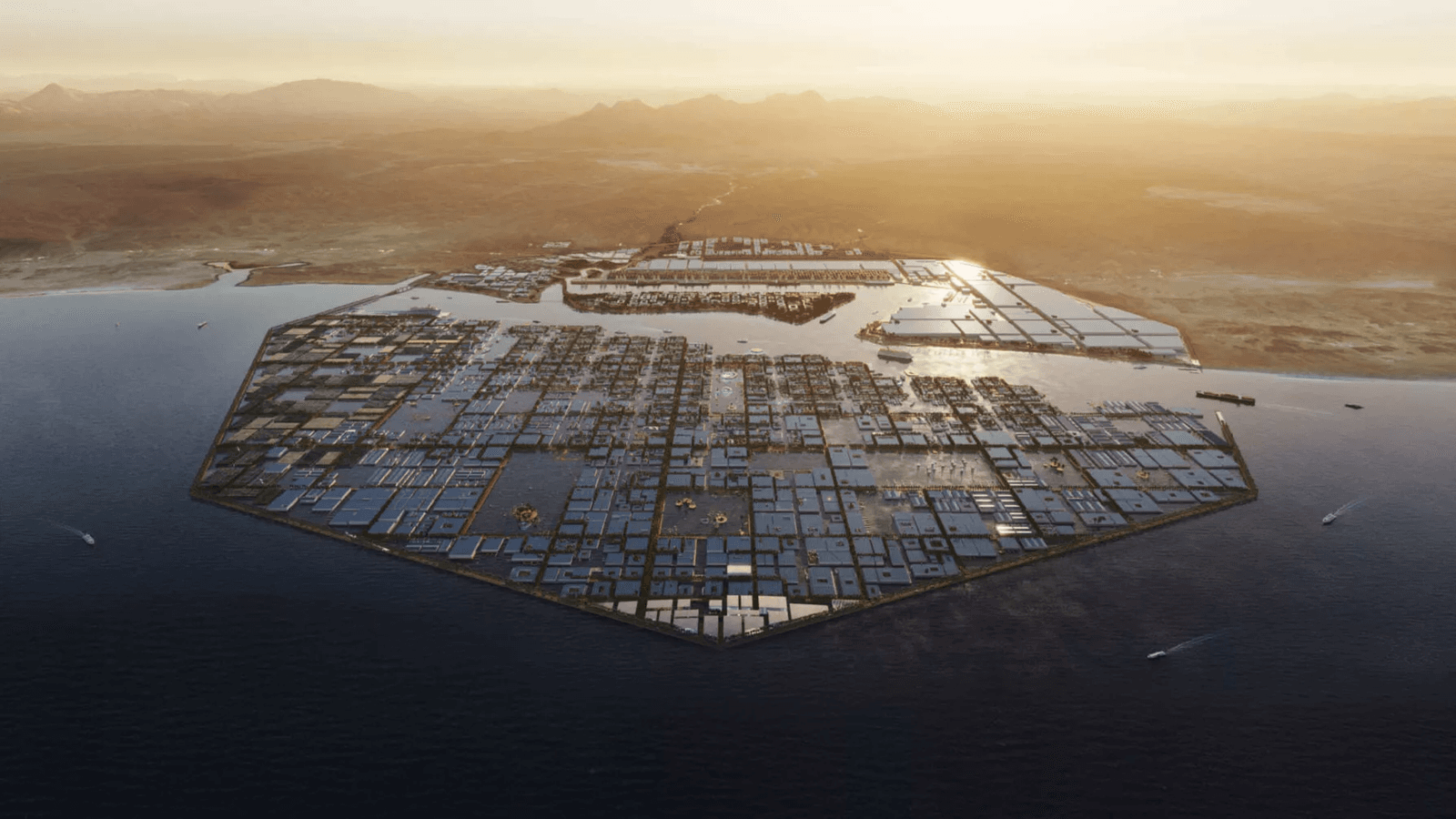
The only large-scale green hydrogen project in Saudi Arabia that is currently operational is NEOM's green hydrogen plant at Oxagon, developed through a joint venture between ACWA Power, Air Products, and NEOM. The project, known as NEOM Green Hydrogen Company (NGHC), was announced in 2020 with a target production capacity of 600 tonnes of green ammonia per day, powered by 4 gigawatts of renewable energy from solar and wind.
Construction on the NGHC plant began in earnest in 2022 and has been progressing through its development phases since. The project represents the most advanced green hydrogen facility in Saudi Arabia and one of the most ambitious anywhere in the world in terms of scale. Air Products has an offtake agreement for the green ammonia produced, which it plans to crack back into hydrogen for distribution in global markets.
The NGHC project is real, it is funded, and it is moving. It is also, in terms of its core engineering and construction contracts, largely awarded. The major EPC contracts, the electrolyser supply agreements, and the renewable energy installation contracts were awarded in earlier phases of development. European companies that were not in the conversation during those phases are not going to access them now.
What the NGHC project does generate — and will continue to generate as it moves toward full operation — is secondary procurement activity: specialist services, technology integration, operations and maintenance contracts, and the supply chain that supports a facility of this scale once it is running. That is a real and ongoing opportunity for companies with the right capabilities and a local presence.
What Is Under Construction With Committed Capital
Beyond NGHC, the green hydrogen projects with the clearest path from announcement to procurement activity are those attached to NEOM's broader development programme and those connected to Saudi Arabia's renewable energy buildout.
NEOM has committed to powering its entire development — including the linear city THE LINE, the coastal development Sindalah, and the industrial zone Oxagon — from 100% renewable energy. The scale of renewable energy infrastructure required to deliver on that commitment is substantial, and the procurement activity it generates spans solar installation, wind energy, grid infrastructure, energy storage, and the green hydrogen and ammonia production that will use surplus renewable capacity.
Saudi Aramco has announced blue hydrogen projects — hydrogen produced from natural gas with carbon capture — that are further advanced than its green hydrogen programme. Aramco's blue hydrogen export facility at Jubail, which shipped the world's first shipment of blue ammonia to Japan in 2020, is operational. Its green hydrogen ambitions are real but on a longer horizon than its blue hydrogen programme.
ACWA Power, which is the leading Saudi developer of renewable energy and green hydrogen projects, has a pipeline of projects beyond NGHC that are in various stages of development. ACWA Power is the company most worth tracking for European suppliers in this space — its project pipeline represents the most visible path from Saudi green hydrogen ambition to actual procurement activity.
The Saudi Green Initiative, launched in 2021, sets a target of producing 4 million tonnes of green hydrogen annually by 2035. That target requires a significant scaling of production capacity beyond NGHC. The projects that will deliver that scaling are in planning and early development phases, with feasibility studies, technology assessments, and site selection processes underway. These are the projects where early engagement — with developers, with ACWA Power, with NEOM, with the Ministry of Energy — has the most value for European companies right now.
What Is Still a Render
Honesty requires acknowledging that a significant portion of Saudi Arabia's publicly announced green hydrogen ambitions are not yet backed by committed capital, awarded contracts, or defined procurement timelines.
Several of the green hydrogen projects referenced in international coverage — including some associated with the Red Sea Project and various industrial cluster announcements — are at concept or pre-feasibility stage. They have been announced, they have ambition attached to them, and they may well proceed. But the gap between a ministerial announcement and an active procurement process in green hydrogen is measured in years, not months, and European companies that treat announcements as procurement signals will find themselves in conversations that go nowhere for a long time.
The distinguishing characteristics of projects that are moving versus projects that are still in the render phase are worth knowing. Projects with committed capital have named developers, defined offtake agreements or credible offtake discussions, active EPC procurement processes, and financing either in place or in advanced negotiation. Projects that are still at concept stage have announcements, targets, and in some cases feasibility study activity — but no committed capital and no active procurement.
The NGHC project has all of the former. Most of the other announced green hydrogen projects in Saudi Arabia currently have some or most of the latter. That gap will close as the economics of green hydrogen improve, as electrolyser costs continue to fall, and as offtake markets develop. But for a European company making market entry decisions in 2026, the distinction between what is moving now and what will move in three to five years is operationally significant.
Where the First Contracts Are for European Companies
Strip away the projects that are not yet generating procurement activity, and the realistic opportunity set for European companies in Saudi green hydrogen concentrates in three areas.
The first is operations, maintenance, and technology services for the NGHC facility and the broader NEOM renewable energy infrastructure. As these facilities move from construction to operation, the demand for specialist technical services, performance optimisation, and technology integration grows. European companies with relevant operational expertise in green hydrogen, electrolysis, ammonia processing, or large-scale renewable energy operations are in a credible position for this work — provided they are present in Saudi Arabia and have built relationships with the operating entities before the contracts are open.
The second is feasibility, engineering, and advisory services for the next generation of projects. The developers and government entities advancing Saudi Arabia's green hydrogen pipeline — ACWA Power, NEOM, Saudi Aramco, the Ministry of Energy — are actively assessing sites, technologies, and production models for projects that will enter active development over the next three to five years. European engineering firms, technology consultancies, and specialist advisers with green hydrogen expertise are relevant to this work. The entry point is relationships with the development teams, not responses to tenders that have not yet been issued.
The third is electrolyser and equipment supply for projects entering active development. As the next wave of Saudi green hydrogen projects moves from feasibility to construction, the procurement of electrolysers, renewable energy equipment, and associated infrastructure will generate significant supply chain activity. European manufacturers in these categories — particularly those with proven large-scale deployment experience — are well positioned for this work, but only if they have established Saudi presence and relationships before the procurement processes open. The companies that show up at the tender stage without prior engagement rarely win.
What European Companies Should Do Now
The practical implication of this analysis is that the green hydrogen opportunity in Saudi Arabia is real, it is significant, and it is on a timeline that rewards early positioning rather than reactive bidding.
The projects that are generating procurement activity now — NGHC and the broader NEOM renewable infrastructure — are past their major contract award phases. The opportunity there is in secondary procurement, services, and relationships with the operating entities.
The projects that will generate the most significant procurement activity over the next three to five years are in development now. The European companies that will be competitive for those contracts are the ones currently building relationships with ACWA Power, with NEOM's procurement and development teams, with the Ministry of Energy's project offices, and with the Saudi entities advancing the green hydrogen pipeline. That relationship-building requires a Saudi presence. It cannot be done from Europe.
The green hydrogen sector in Saudi Arabia is not yet the procurement market it will become. But the gap between now and then is the window in which competitive positions are built. Companies that understand this and act on it are the ones that will look back on 2026 as the year they got into the market at the right time.
Saudi Venture Hub is based in Riyadh. We work with European companies navigating Saudi market entry, from legal structure and compliance to the relationships and presence that turn a license into a business. If you want to understand what genuine commitment to this market looks like in practice, we are available for that conversation.