Saudi Arabia's Mining Sector Opens Up: The $2.5 Trillion Opportunity That Most European Companies Are Missing
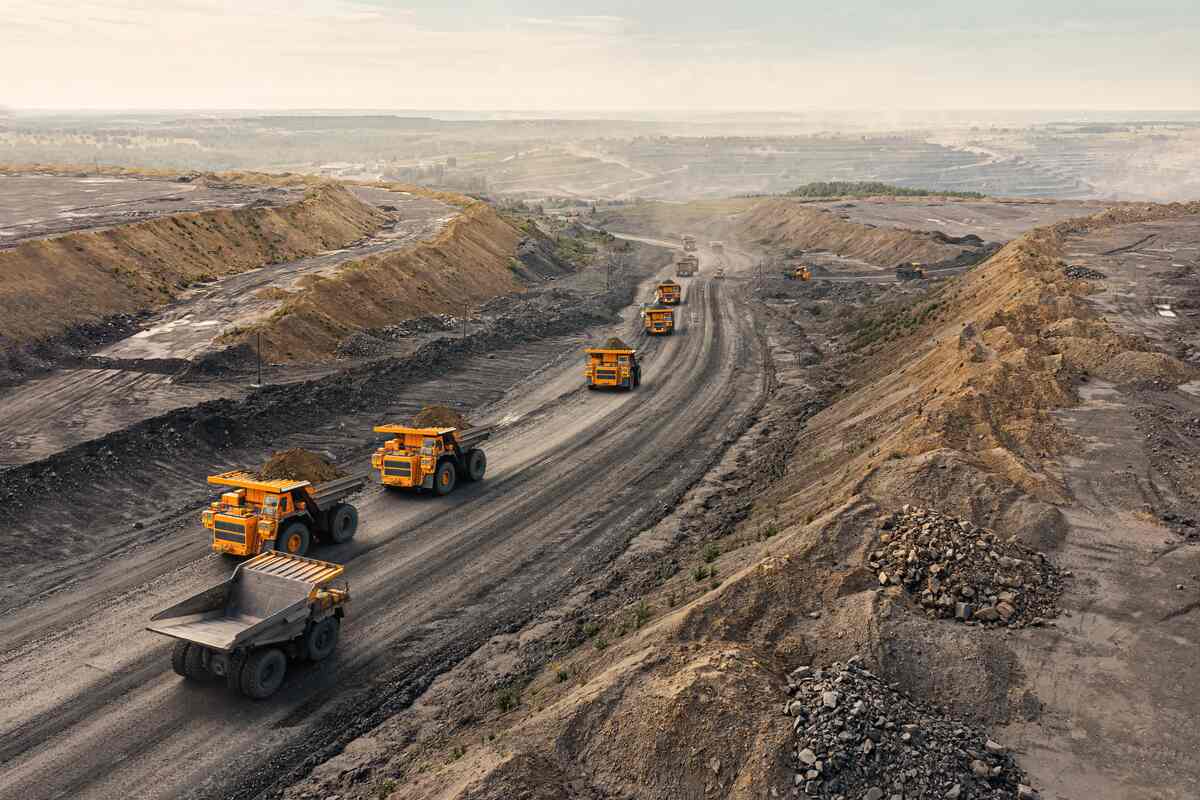
In January 2026, Saudi Arabian Mining Company announced a $110 billion investment plan at the Future Minerals Forum in Riyadh. The plan targets tripling gold and phosphate production, doubling aluminium output, and developing eight megaprojects over the next decade. The stated ambition is to rank Ma'aden among the world's top three mining companies within ten years.
17 March 2026
The $2.5 Trillion Opportunity That Most European Companies Are Missing
In January 2026, Saudi Arabian Mining Company announced a $110 billion investment plan at the Future Minerals Forum in Riyadh. The plan targets tripling gold and phosphate production, doubling aluminium output, and developing eight megaprojects over the next decade. The stated ambition is to rank Ma'aden among the world's top three mining companies within ten years.
That announcement did not make significant headlines in Europe. It should have.
The Scale of What Is Being Built
Saudi Arabia's mineral wealth was revalued in 2025 to SAR 9.375 trillion by the National Minerals Program, the equivalent of $2.5 trillion. The figure represents a substantial upgrade from earlier estimates of $1.3 trillion and reflects the results of intensive geological surveying across the Arabian Shield, the ancient crystalline basement rock that underlies the western third of the Kingdom. House of Saud
The Arabian Shield is one of the least explored major geological formations on earth. That is not an oversight. Until recently, the regulatory environment did not support foreign participation in exploration or extraction. That has changed materially since 2020, and the pace of change has accelerated through 2024 and 2025.
The number of active exploration companies in Saudi Arabia increased from six in 2020 to 226 in 2024, a 38-fold increase fuelled by investor interest. Foreign investors now account for 66% of total licence bidders across eight tender rounds. Arab News The sector has gone from effectively closed to foreign operators to majority foreign-led in under five years.
Saudi Arabia's minesite exploration budget surged 595%, reaching $146 million in 2025 from $21 million in 2022. In 2025, 72% of the total exploration budget was allocated to gold and 23% to copper. S&P Global These are not exploratory allocations. They reflect a government that has identified mining as the third pillar of its economy, alongside oil and petrochemicals, and is funding that position accordingly.
What the Regulatory Reforms Actually Changed
The opening of Saudi Arabia's mining sector to foreign companies is not a product of enthusiasm. It is the result of deliberate legal reform designed to create a competitive investment environment.
A new mining investment law reduced the corporate tax rate for the sector to 20% from 45%, enhancing investor confidence and aligning regulations with global standards. S&P Global That reduction, from 45% to 20%, is among the most significant single changes to the economics of mining investment in the kingdom and directly addresses one of the primary objections foreign operators had historically cited.
The Saudi government established a $182 million mineral exploration incentive programme and funding for up to 75% of development costs through the Saudi Fund for Development. The Kingdom aims to attract $100 billion in mineral processing investment by 2035. U.S. Department of State
The licensing process has also been restructured. In its ninth licensing round, Saudi Arabia awarded 172 mining sites across three mineral-rich belts, attracting approximately SAR 671 million in pledged investments, marking the largest licensing round in its history. S&P Global A tenth round was announced at the Future Minerals Forum in January 2026, covering 13,000 square kilometres.
The government has also made geological data available to prospective investors through a centralised mining platform, reducing the exploration risk that typically deters early-stage entry. This is a significant change. In most frontier mining jurisdictions, subsurface data is proprietary or absent. Saudi Arabia is actively publishing it to lower the barrier to entry for foreign operators.
The Commodities That Matter
Gold and copper are the headline commodities, but the opportunity extends across a range of minerals relevant to European industrial and energy transition interests.
On gold, Saudi Arabia operates six major gold mines, and Ma'aden reported in January 2026 the addition of 7.8 million ounces of new gold resources across four key areas. The Mansourah-Massarah mine, which began production in 2022, targets annual output of 320,000 ounces, making it the Kingdom's largest gold operation. House of Saud
Copper is emerging as the second strategic priority. The Arabian Shield's base metal potential is only beginning to be understood. Several major discoveries in 2025 and 2026 have highlighted the Kingdom's potential as a significant copper and zinc producer. House of Saud The Jabal Sayid copper mine, a joint venture between Ma'aden and Barrick Gold, is the anchor operation, and new exploration results from the Najran region in southern Saudi Arabia are pointing to additional economically viable copper, zinc, gold, and silver resources.
Lithium is the most strategically significant development for European investors with exposure to the energy transition. In January 2025, Aramco and Ma'aden signed non-binding Heads of Terms to form a minerals exploration and mining joint venture focused on energy transition minerals, with lithium extraction as the headline objective. House of Saud European manufacturers dependent on battery supply chains have a direct strategic interest in how this plays out.
Phosphate is a different category entirely. Saudi Arabia is already among the world's major phosphate producers through Ma'aden's operations, and the European agricultural sector's dependence on phosphate imports makes this a supply chain conversation, not just an investment one.
Where European Companies Fit
The opportunity for European companies is not limited to large mining operators or resource multinationals. It spans the full supply chain.
The Kingdom's regulatory framework and incentives have opened up several avenues for investment, including direct engagement in mining projects, partnerships with local entities, and the provision of specialised services and technology. Investing News Network
That third category is where most European companies sit. Saudi Arabia is building a mining sector largely from scratch in terms of operational infrastructure, workforce capability, and processing technology. The demand for equipment suppliers, engineering firms, environmental consultancies, logistics providers, water treatment specialists, and digital technology companies is structural and growing.
Global players including India's Vedanta and China's Zijin Mining are demanding digital-ready machines, pushing Saudi Arabia toward autonomous drills and sensor-rich loaders. House of Saud European industrial technology companies, particularly those with established capabilities in mining automation, environmental management, or metallurgical processing, are entering a market where the technology gap is wide and the government is actively funding its closure.
Ma'aden is looking to invest in advanced exploration technology and techniques, including digital twin technology, artificial intelligence, and robotics. It has already partnered with Ivanhoe Electric, a US-based specialist in advanced mineral exploration technologies, taking a 9.9% stake in the company, with a joint venture to survey approximately 48,500 square kilometres of land. PIF The pattern is clear: the kingdom is acquiring technology through partnership, not procurement. Companies that position as partners rather than vendors have a different conversation.
The Infrastructure Connecting It
Vision 2030 targets raising the mining sector's contribution to GDP to SAR 240 billion by 2030. Plans include building a dedicated mining railway connecting mines to processing areas in Ras Al-Khair. Mawhiba-rabit Ras Al-Khair is already home to one of the world's largest aluminium facilities and is the designated hub for Ma'aden's downstream processing operations. The SEZ established at Ras Al-Khair, coming into effect in April 2026, adds a layer of regulatory incentive for companies establishing operations in the maritime and industrial processing corridor.
The Jazan SEZ, also launching in April 2026, covers food processing, mining services, and downstream manufacturing. For European companies in mineral processing, chemicals, or industrial services, the combination of SEZ incentives and proximity to mining operations in the south of the kingdom creates a compelling entry point that did not exist twelve months ago.
What the Numbers Mean for Timing
With an ambitious goal of attracting $98 million in foreign investment for mineral exploration, Riyadh has committed approximately $182 million in incentives through 2030, while exploration spending exceeded $280 million in 2024. Arab News
The incentive window is time-limited by design. Saudi Arabia is using government funding to de-risk the early phases of sector development, with the expectation that commercial activity takes over as the sector matures. Companies that enter during the incentive phase capture a different cost structure than those that enter once the sector is established and competitive.
The Future Minerals Forum, which Saudi Arabia positions as its premier diplomatic platform for the mining sector, attracted over 18,000 attendees and facilitated 126 agreements worth approximately $28.5 billion across exploration, financing, research, and processing initiatives during 2025. Discovery Alert The 2026 forum, held in January, was framed around the theme of global mineral security, the issue that is increasingly driving European industrial policy. Saudi Arabia is positioning itself as a solution to that problem. European companies that understand this framing arrive with a different kind of leverage.
The mining sector is where Saudi Arabia's resource base, its capital, and its industrial ambitions intersect. For most European companies, it remains largely off the radar. That is the opportunity.
Saudi Venture Hub is based in Riyadh. We work with European companies navigating Saudi market entry, from legal structure and compliance to the relationships and presence that turn a licence into a business. If you want to understand what genuine commitment to this market looks like in practice, we are available for that conversation.